


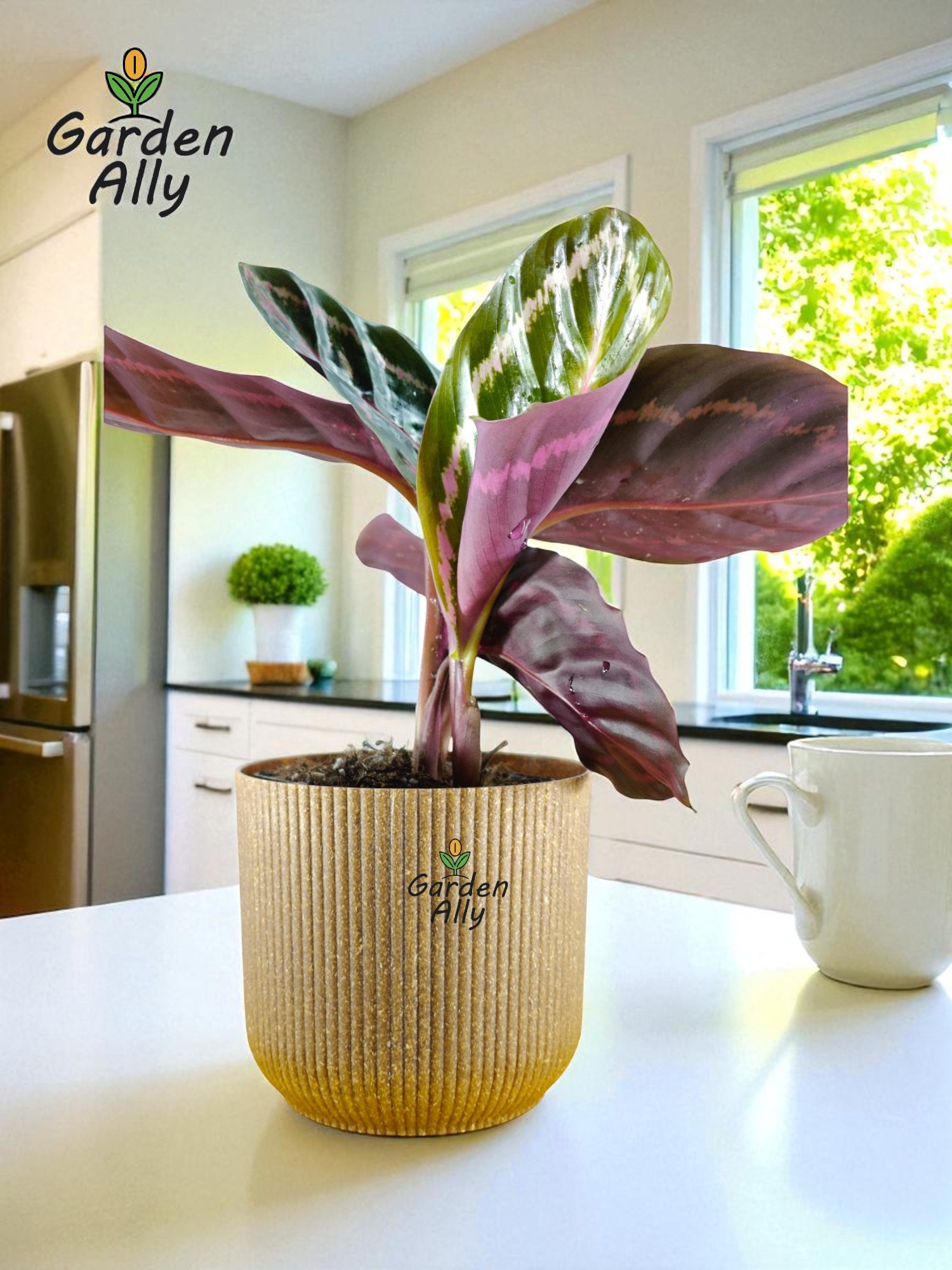
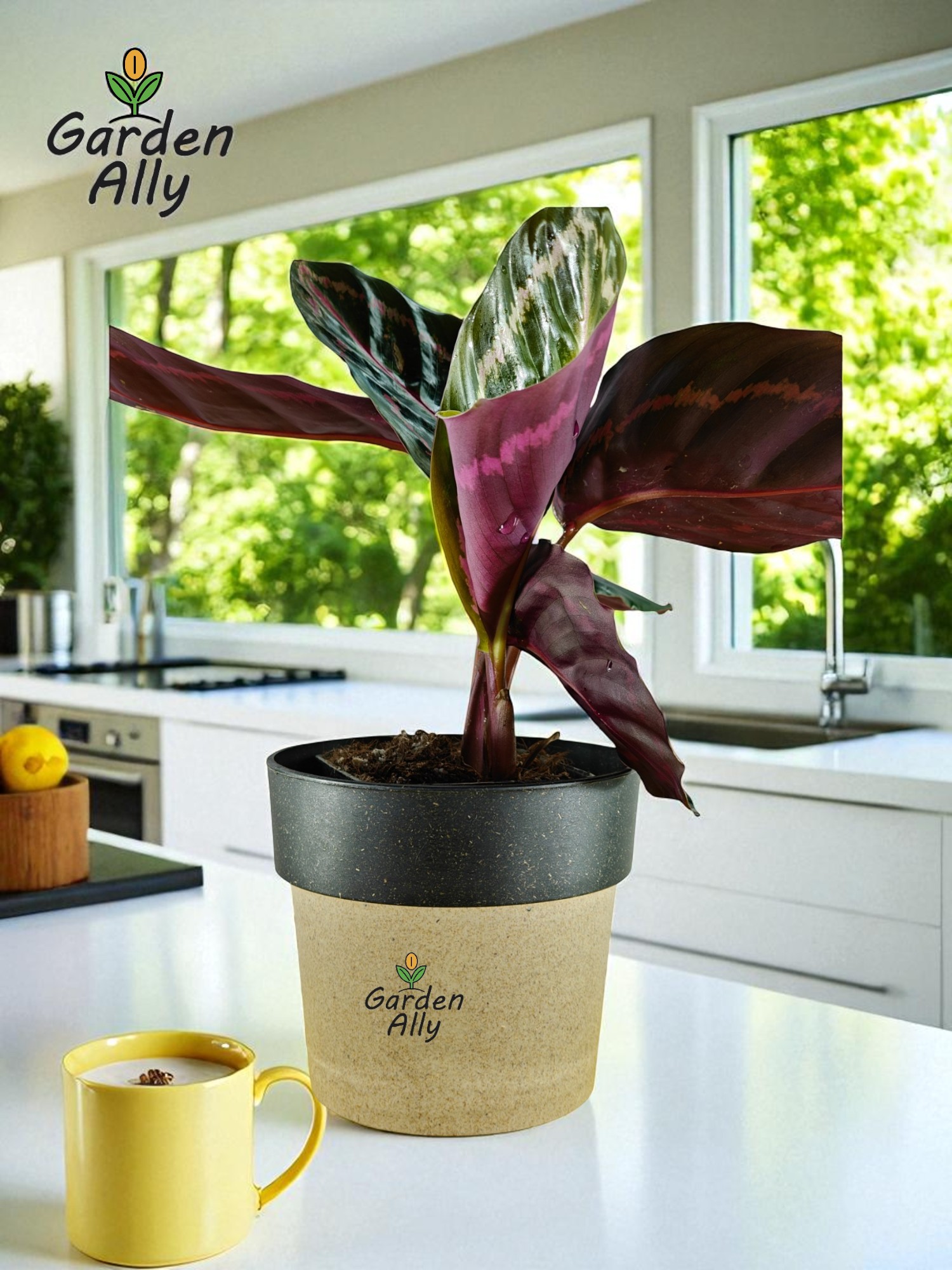
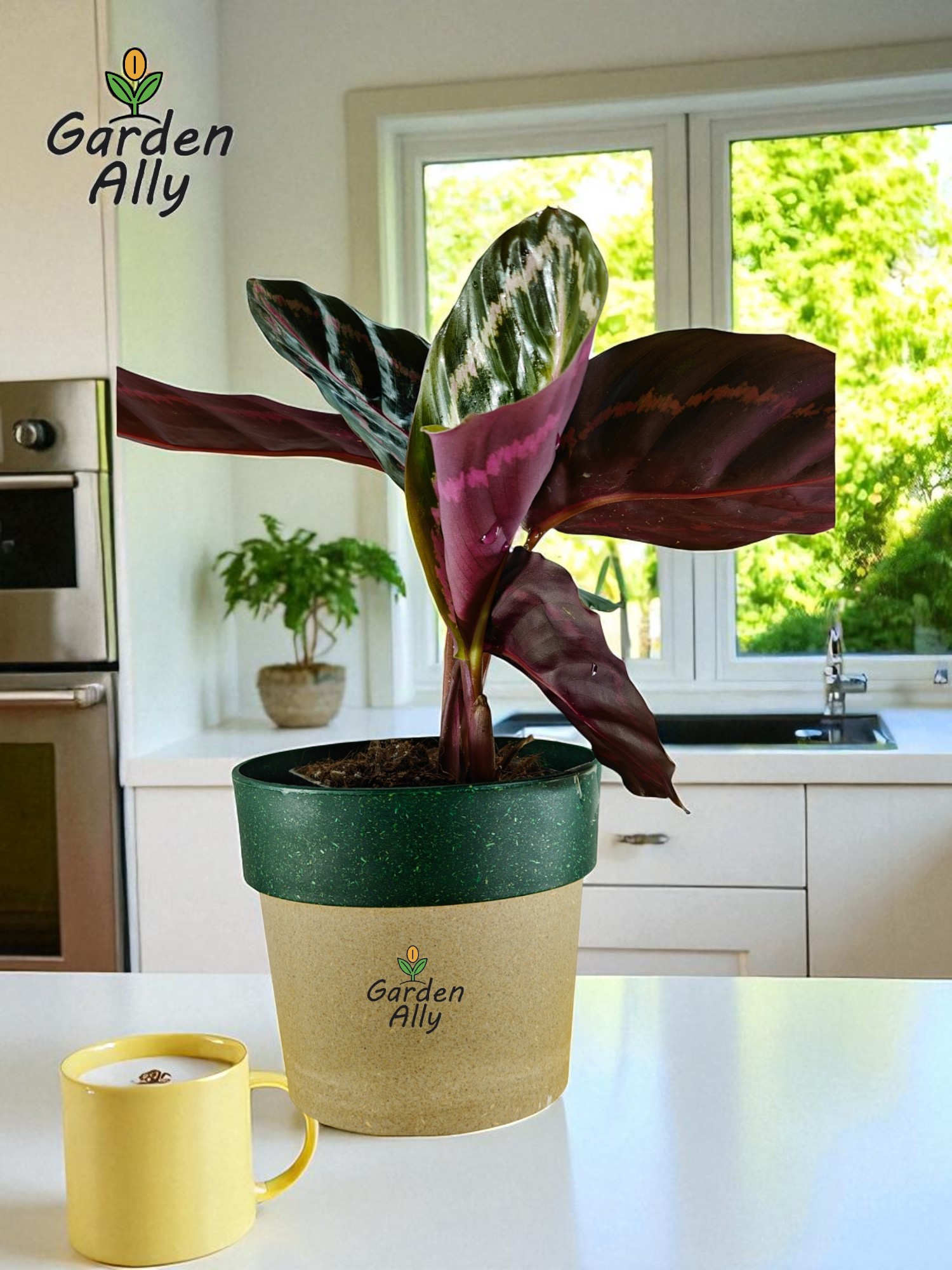
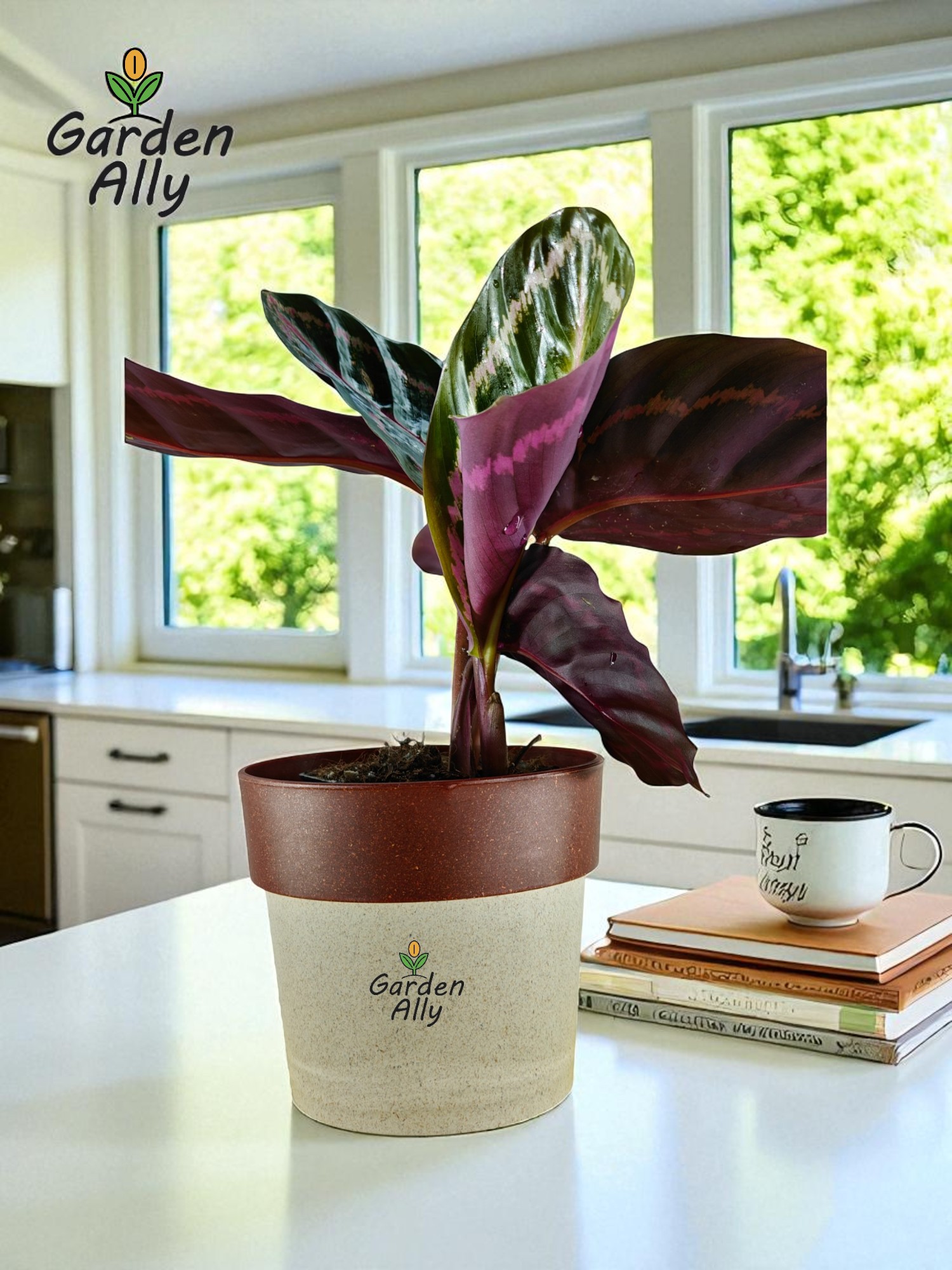
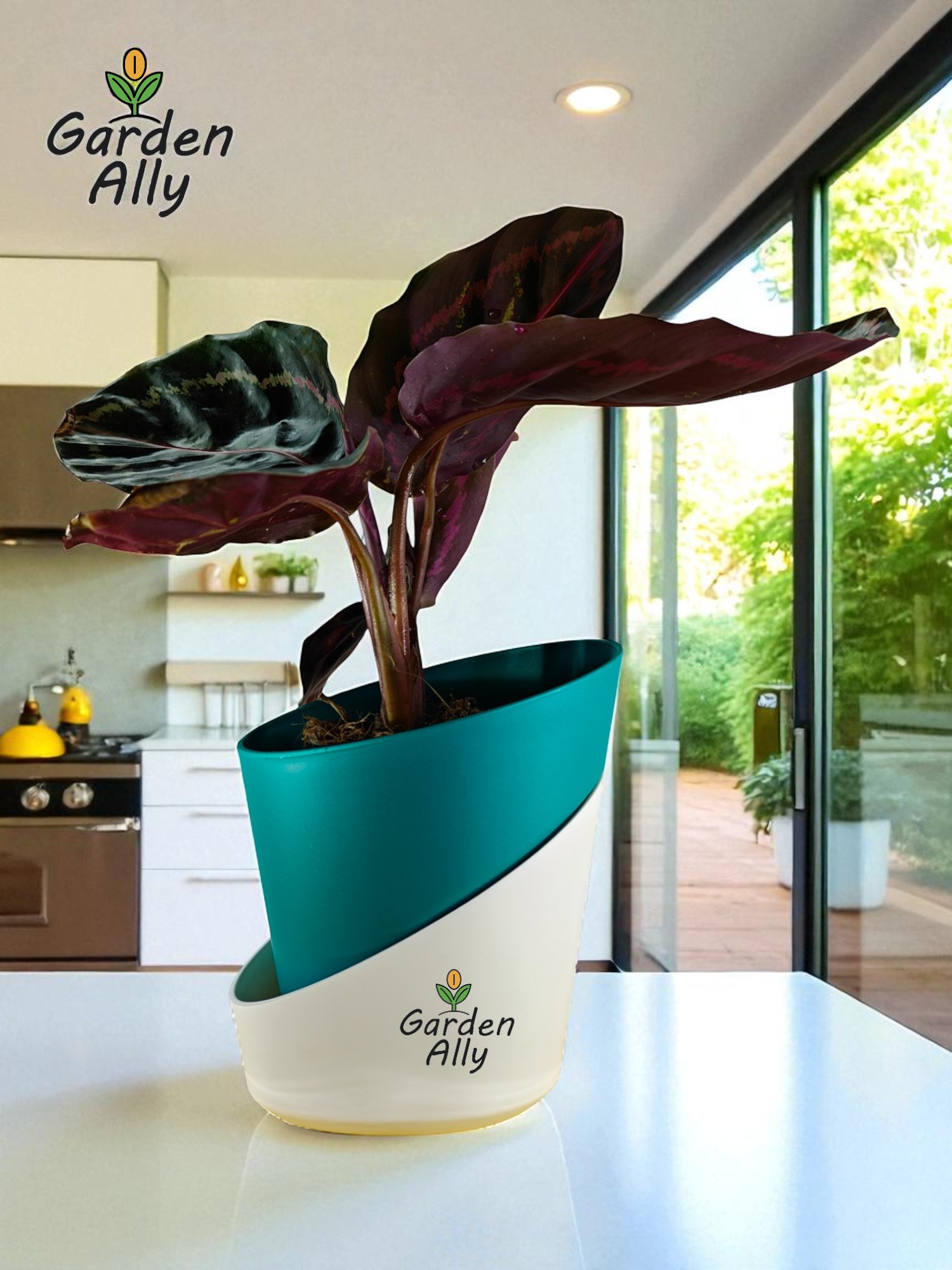
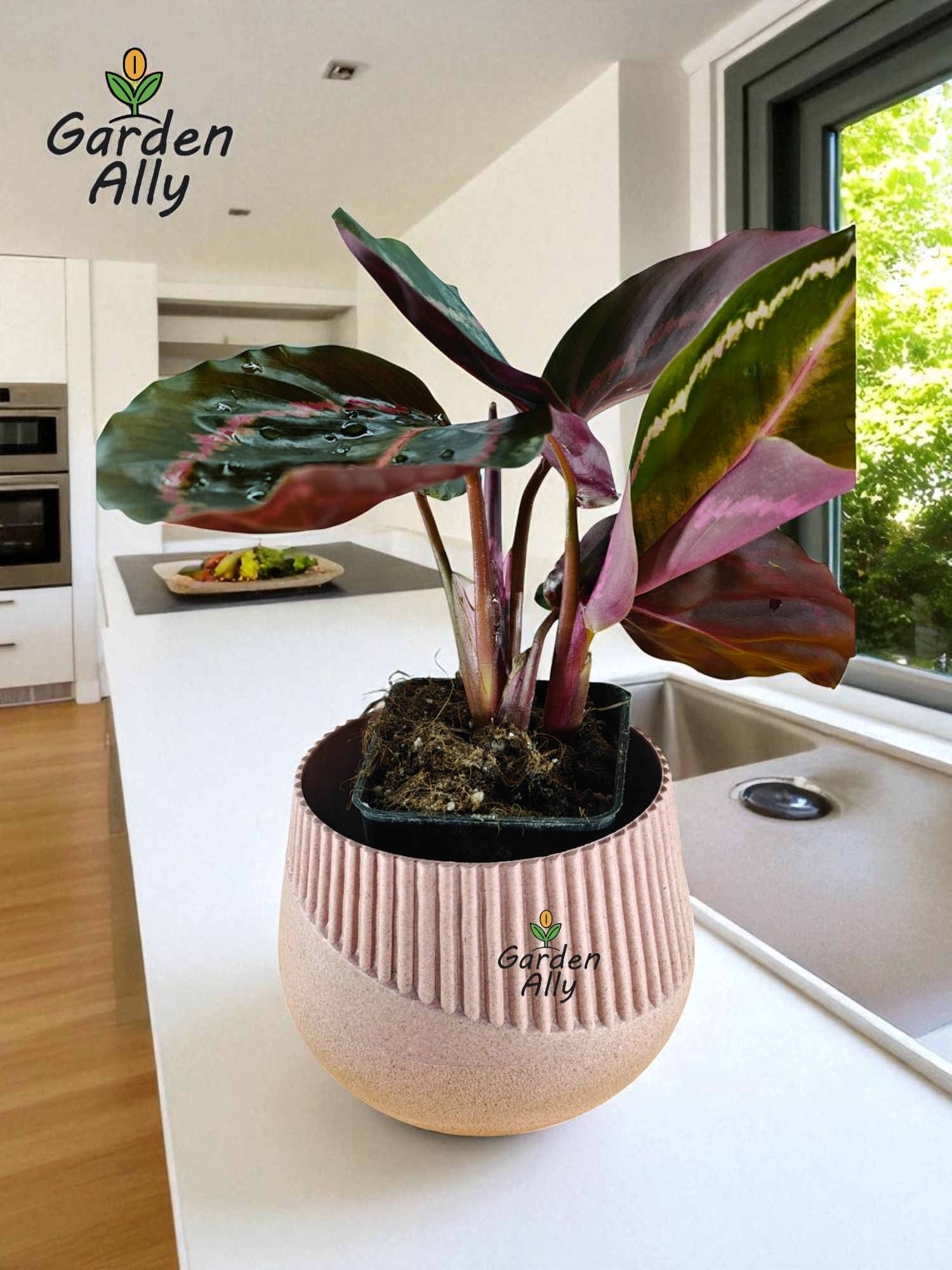
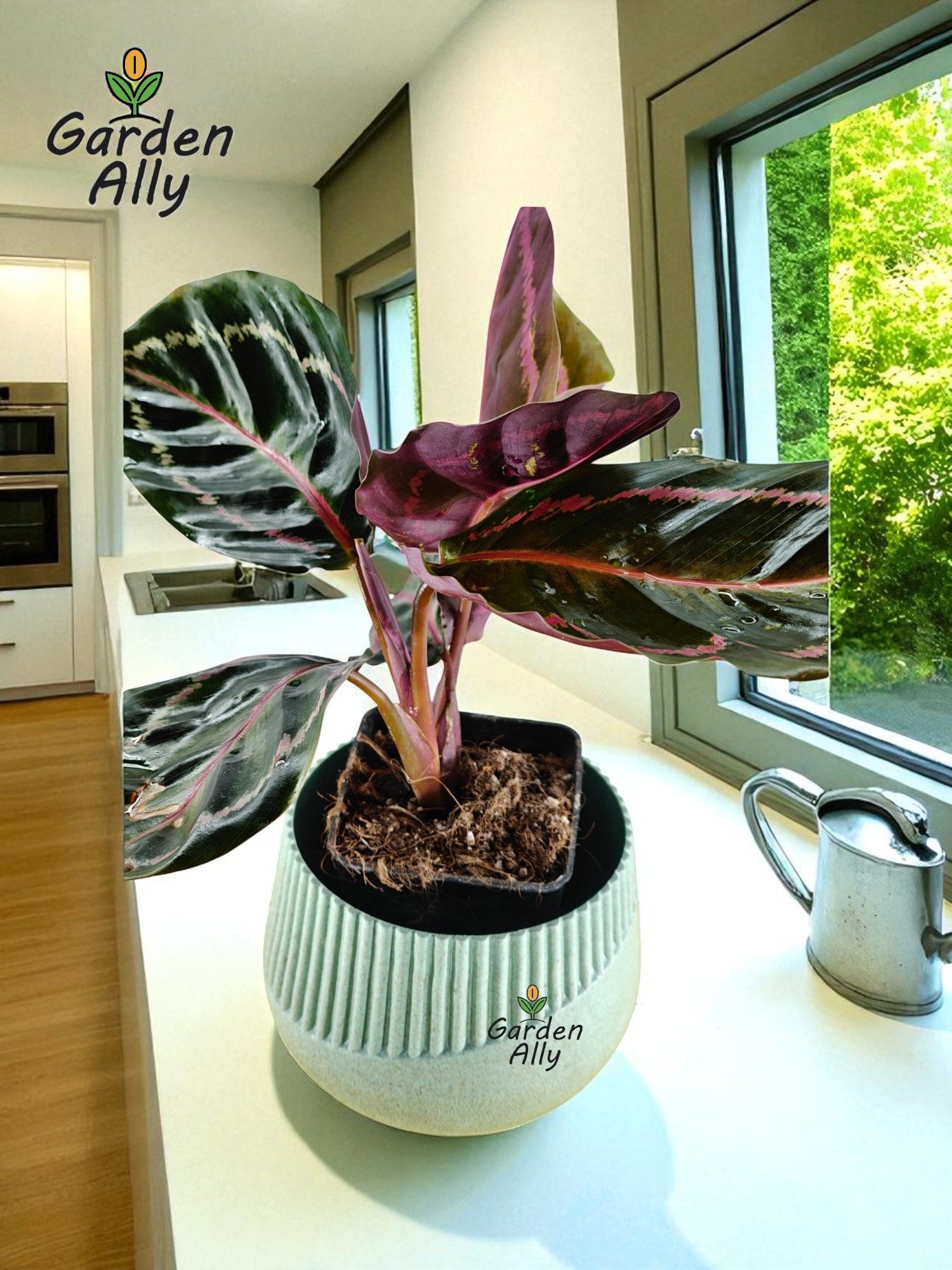
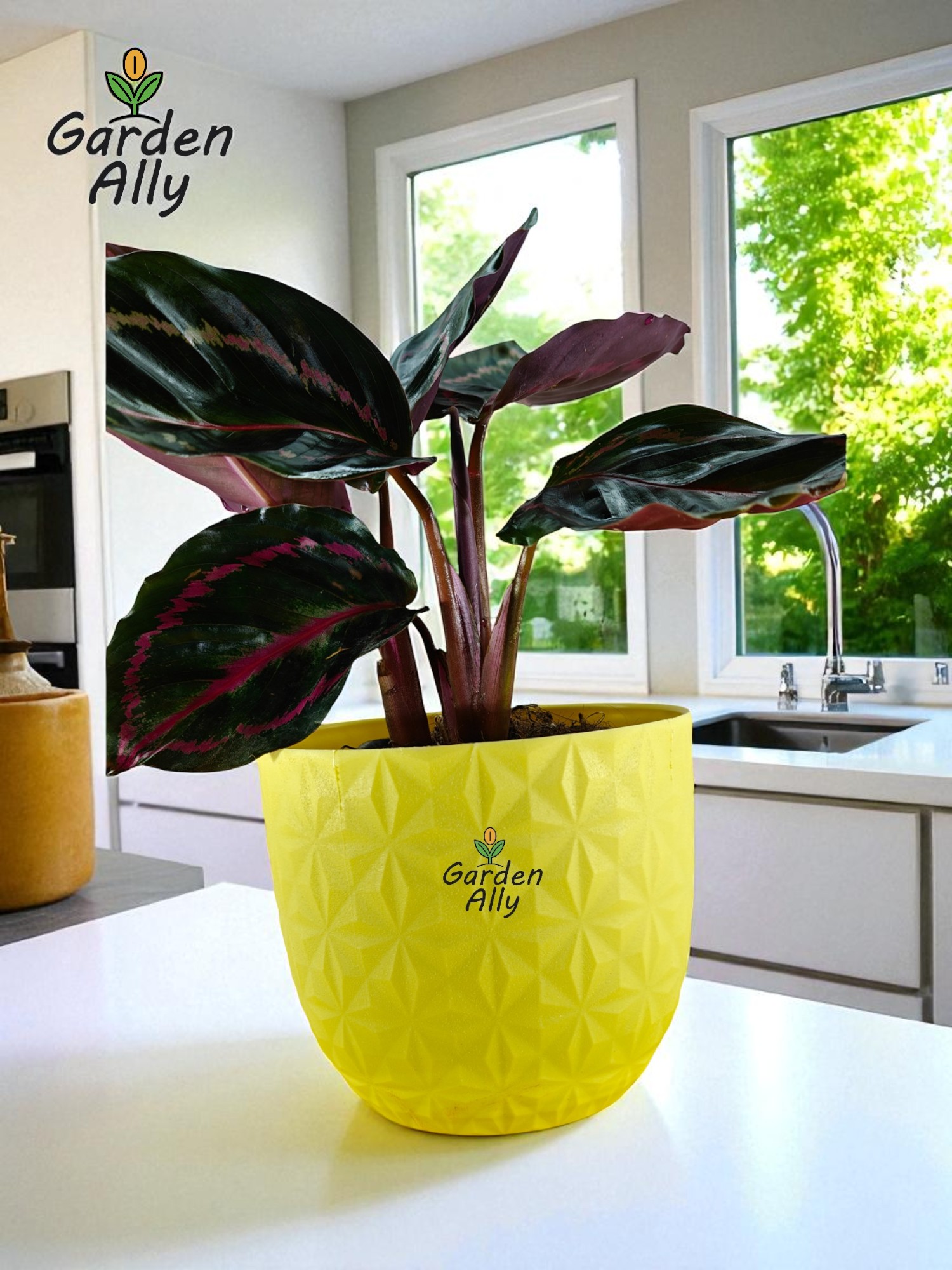
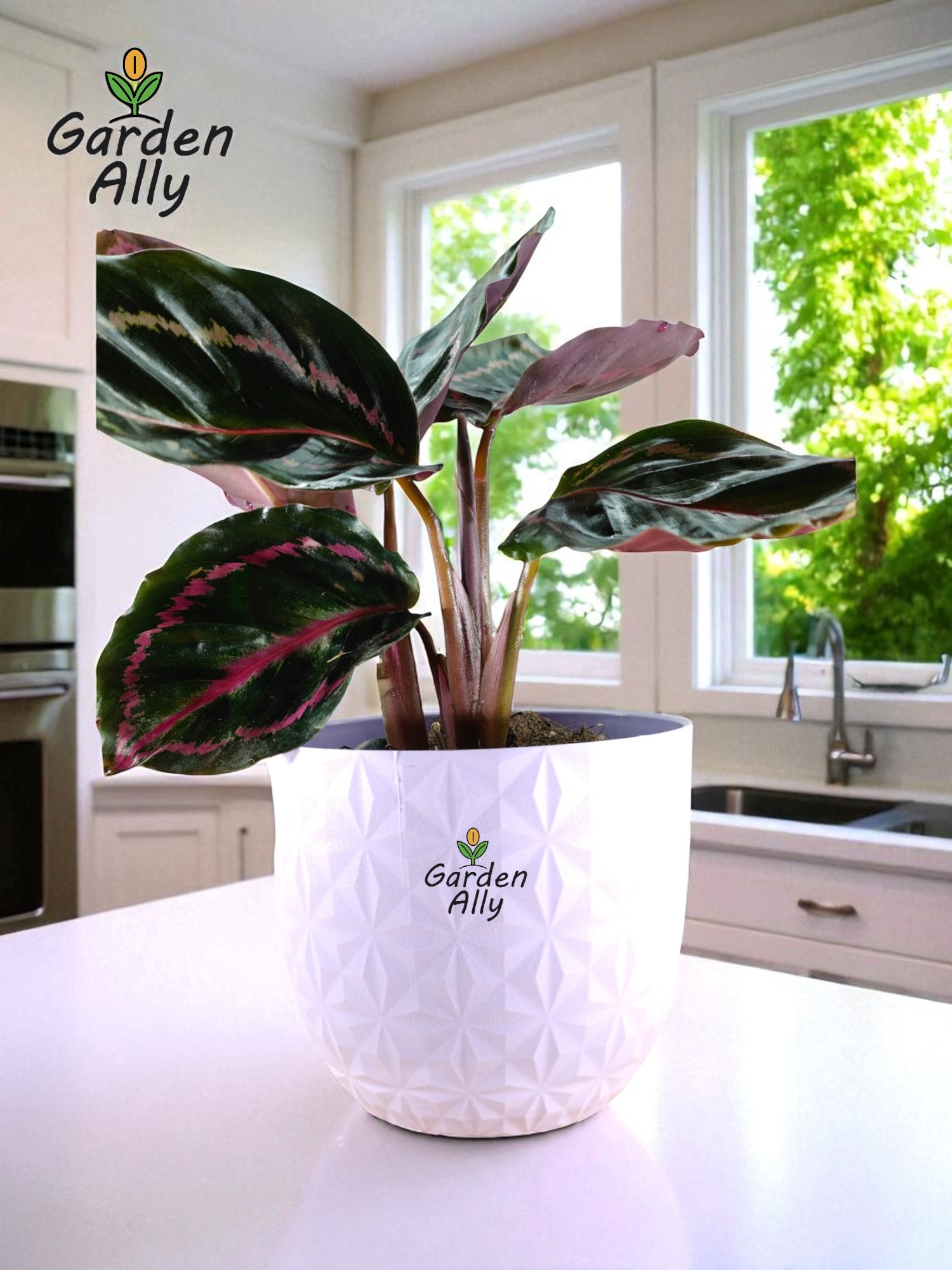
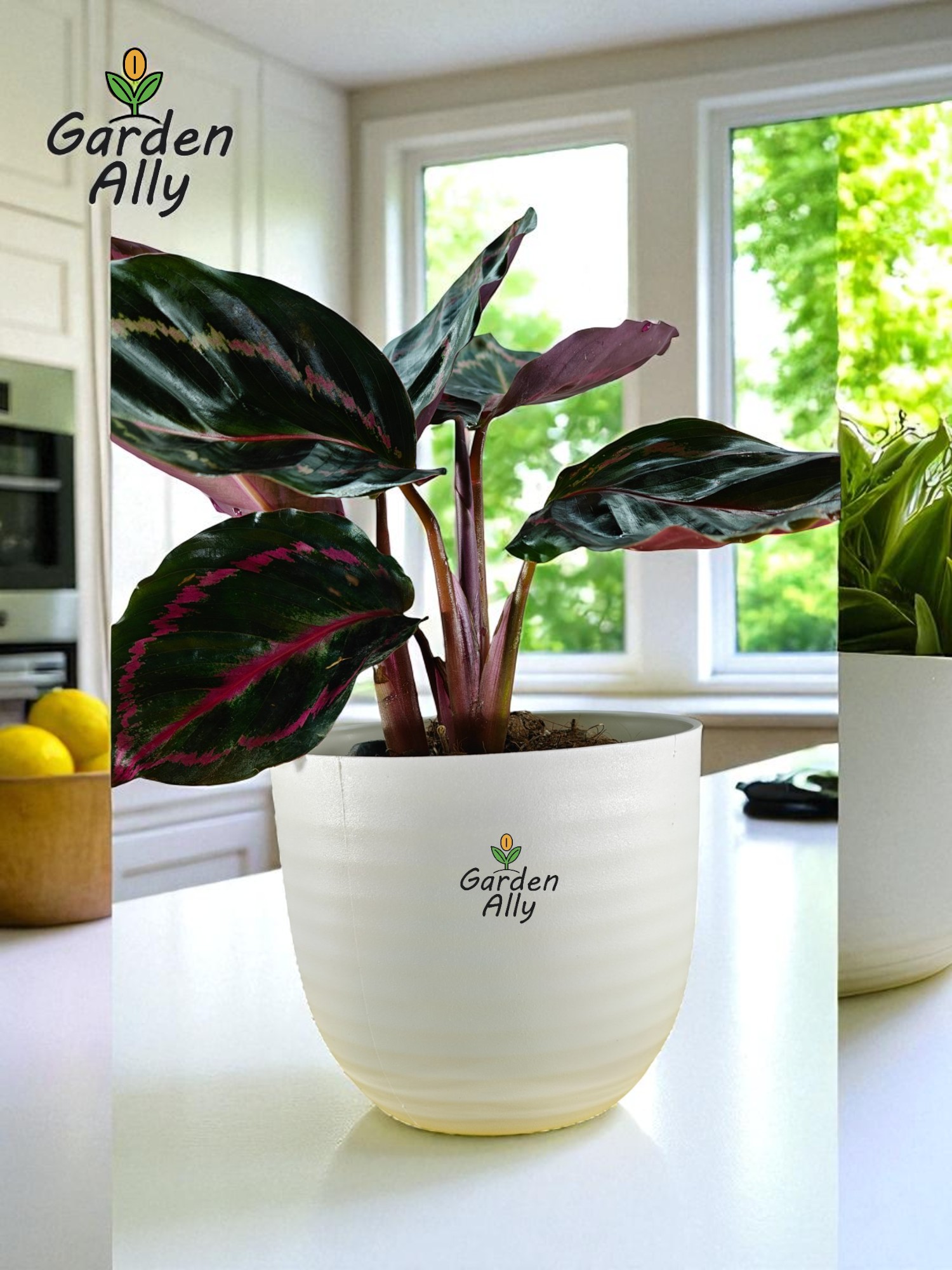
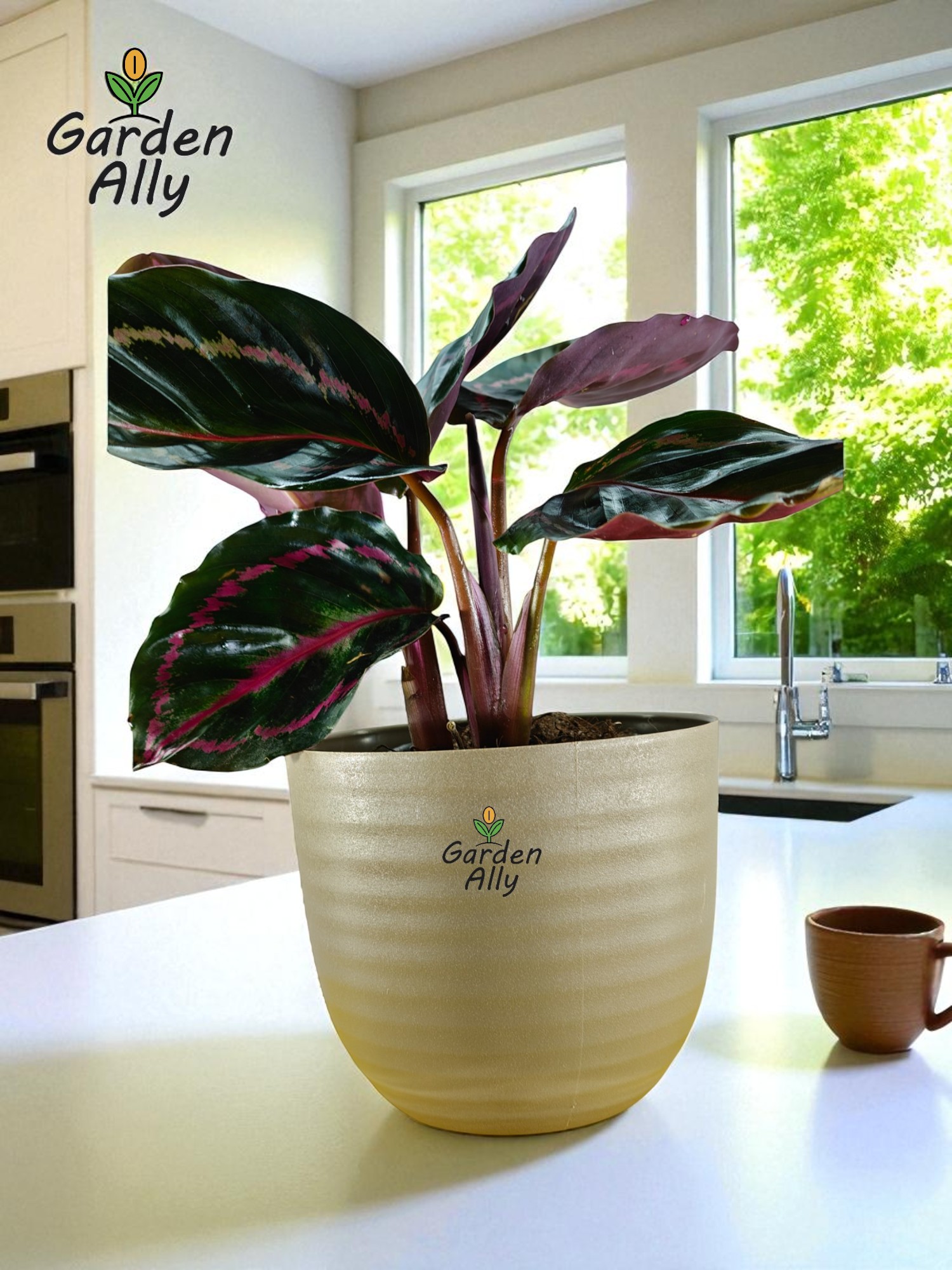
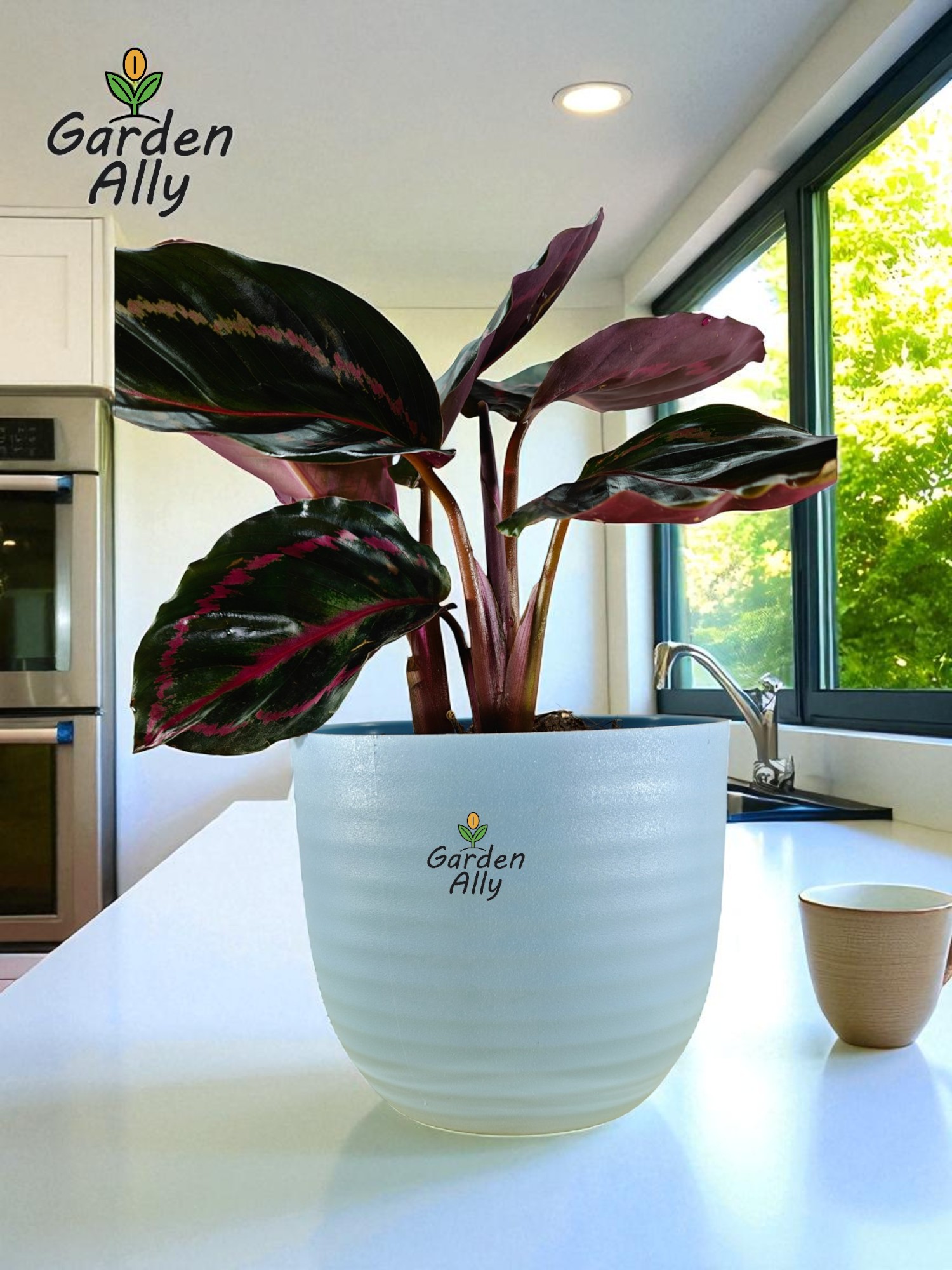
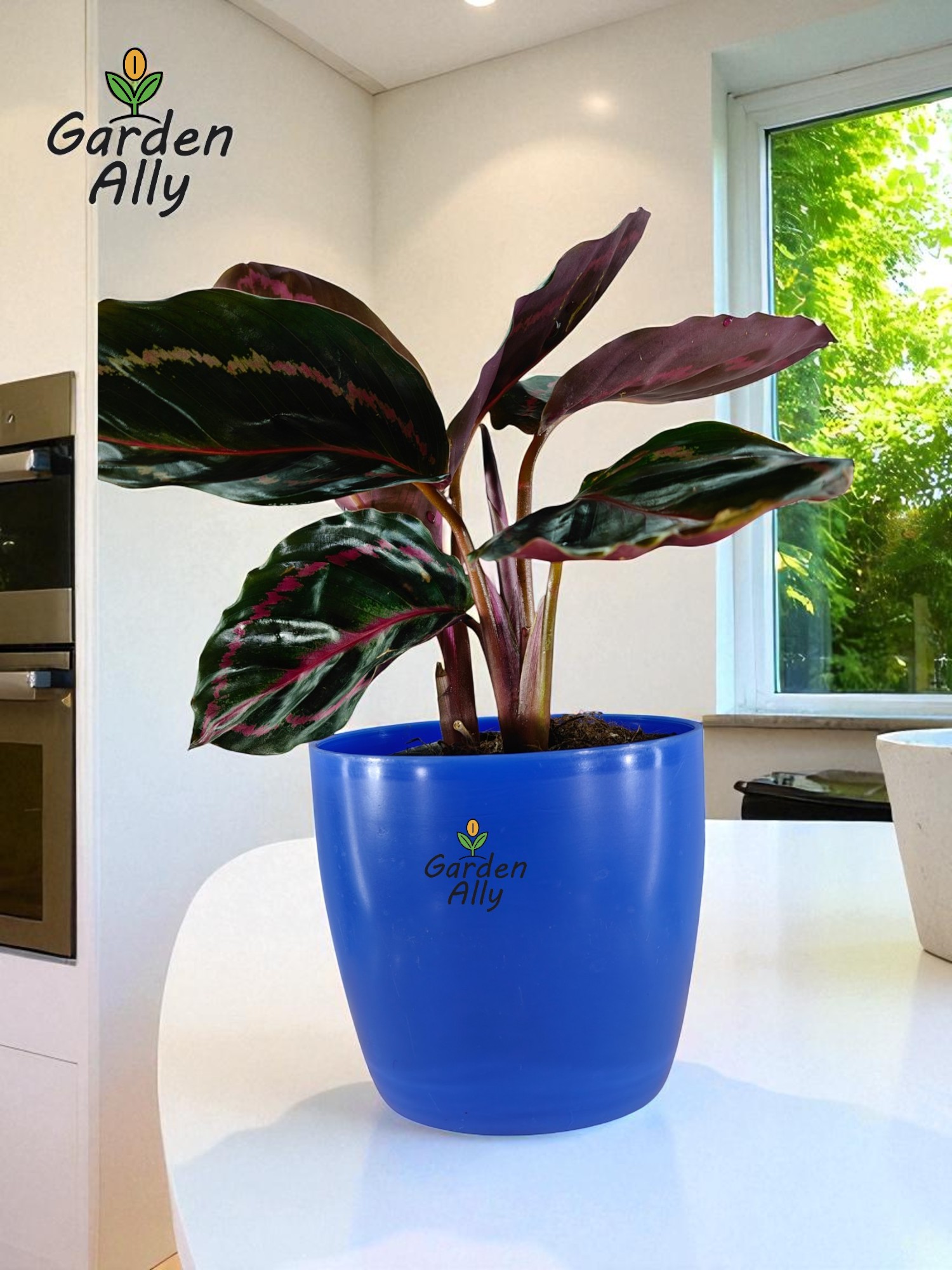
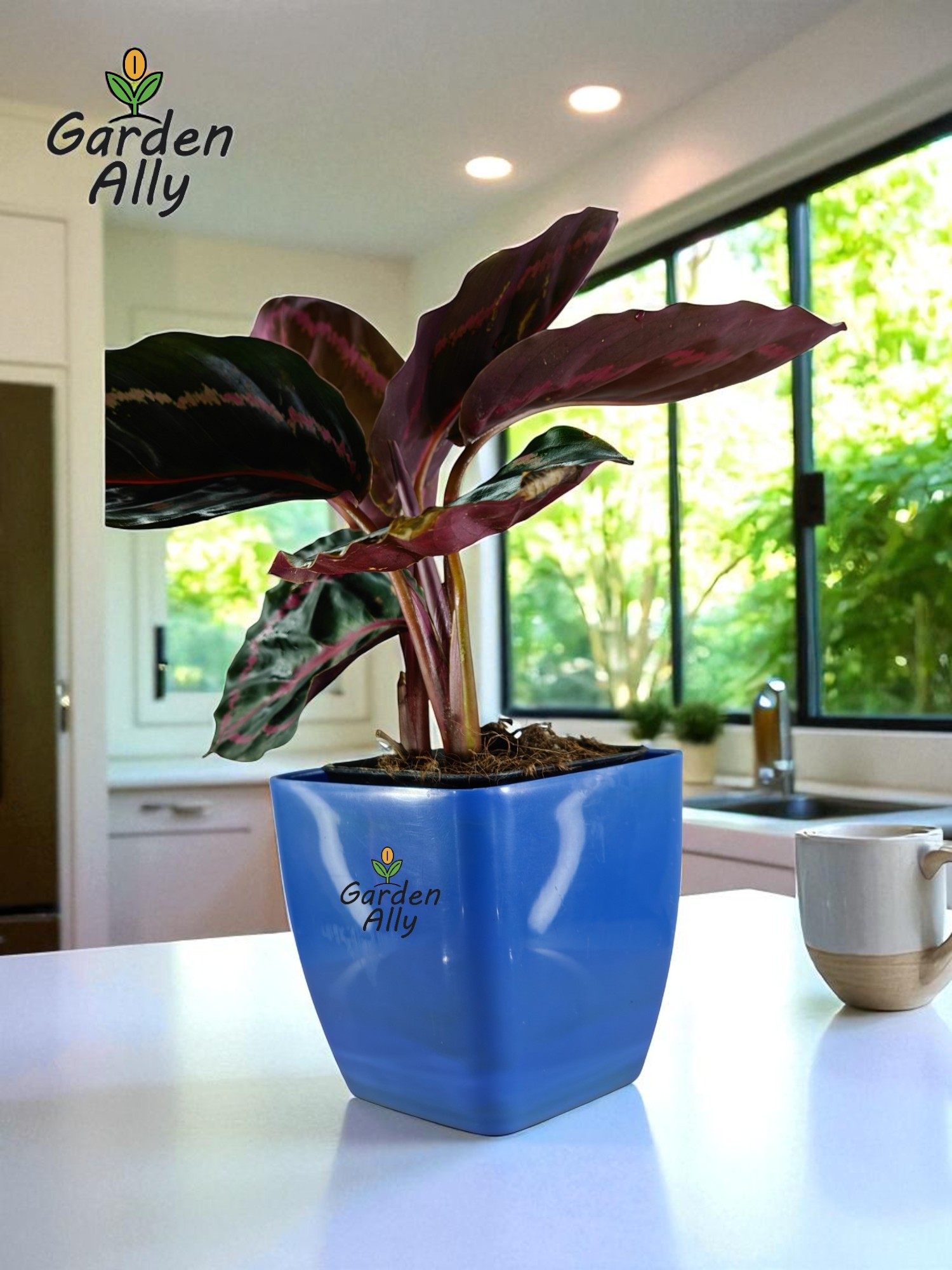
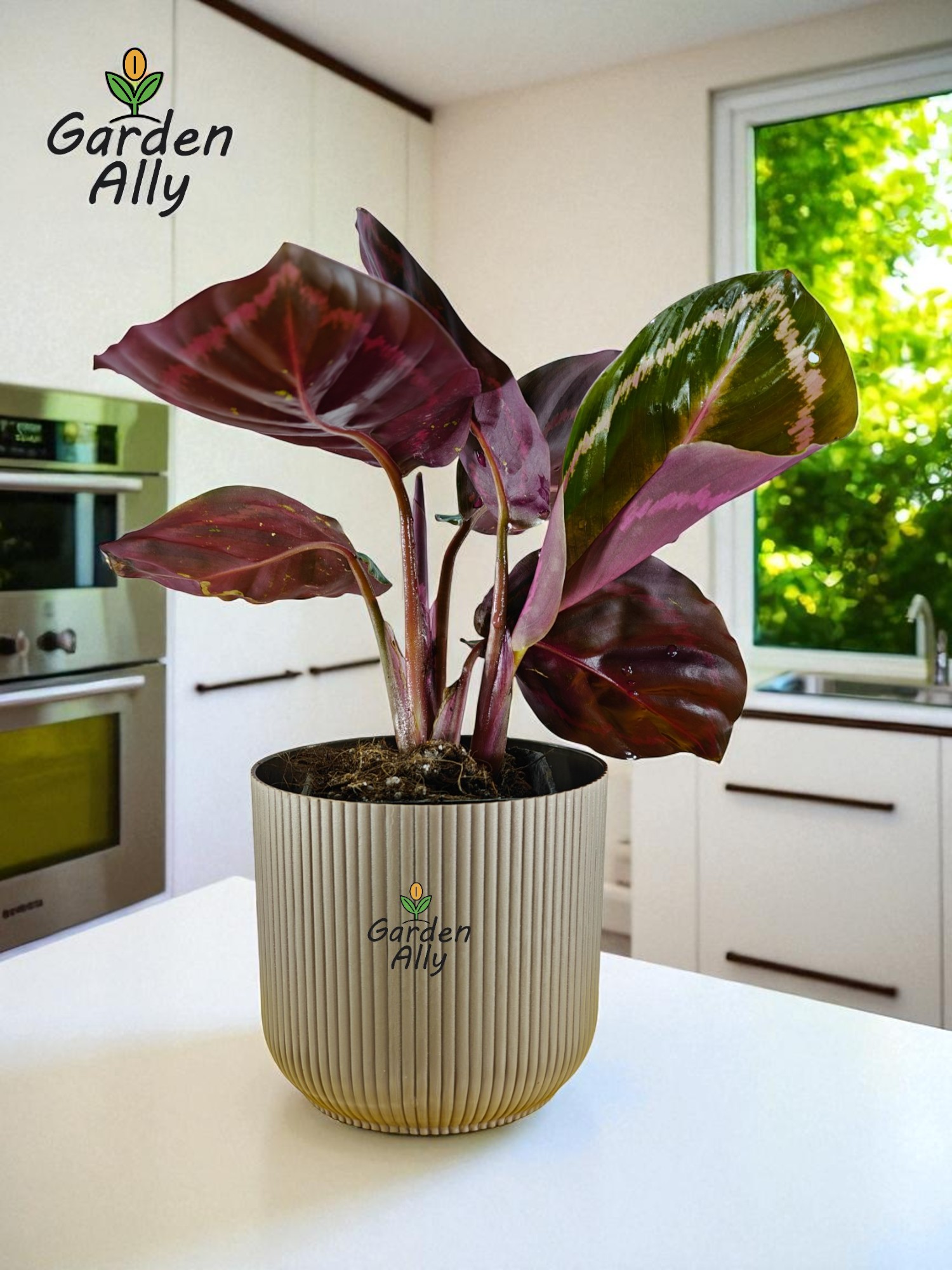
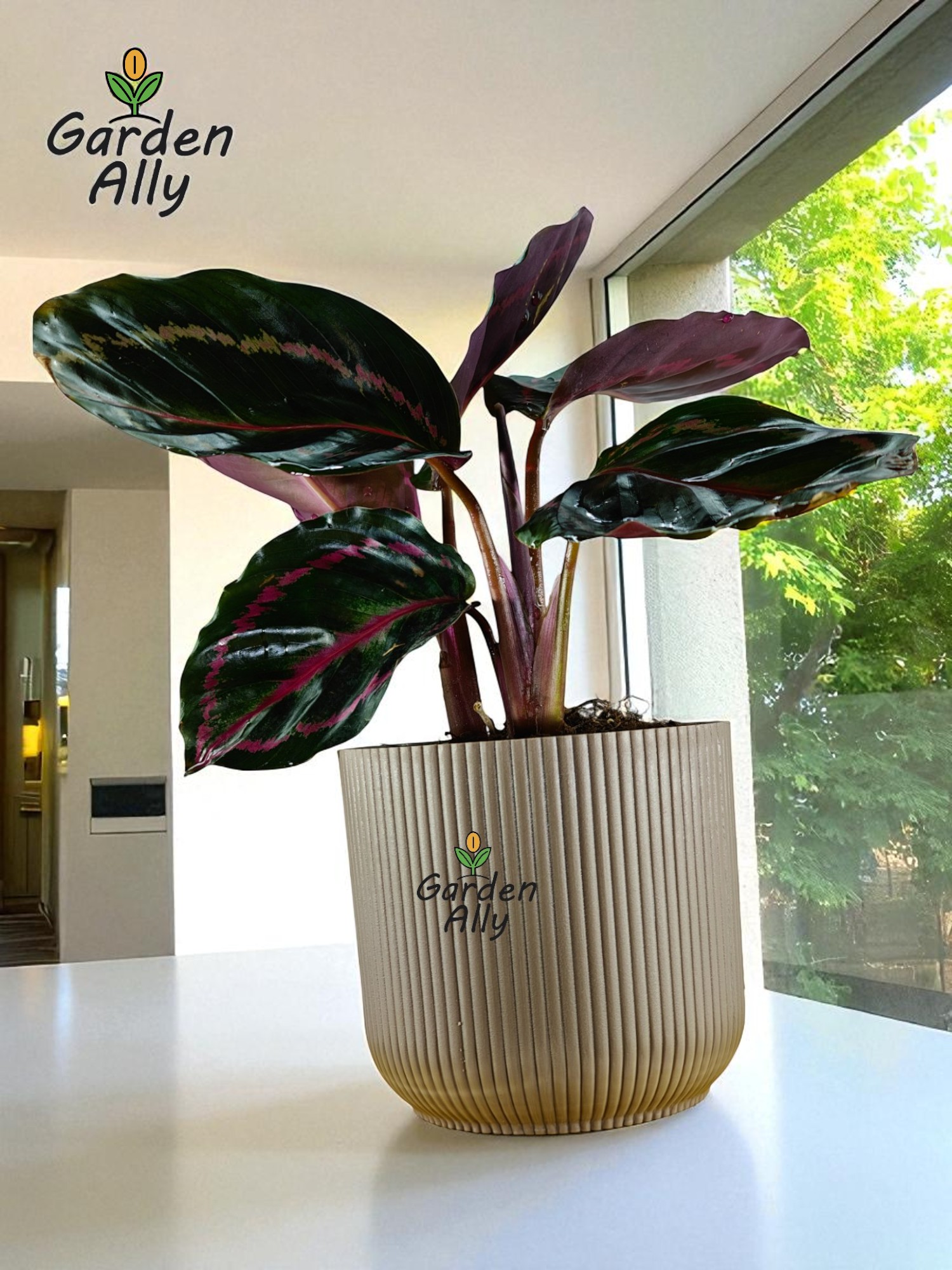
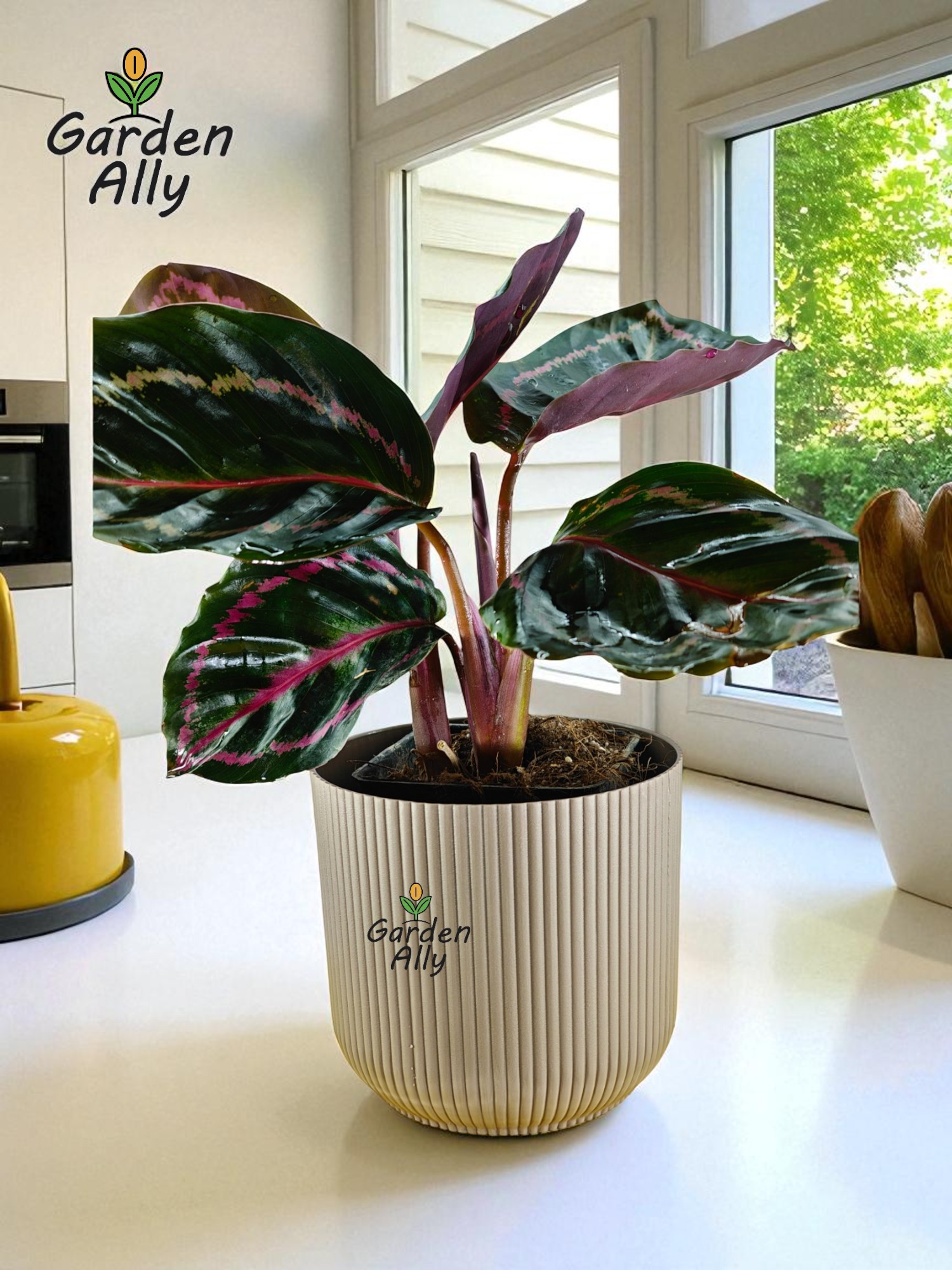
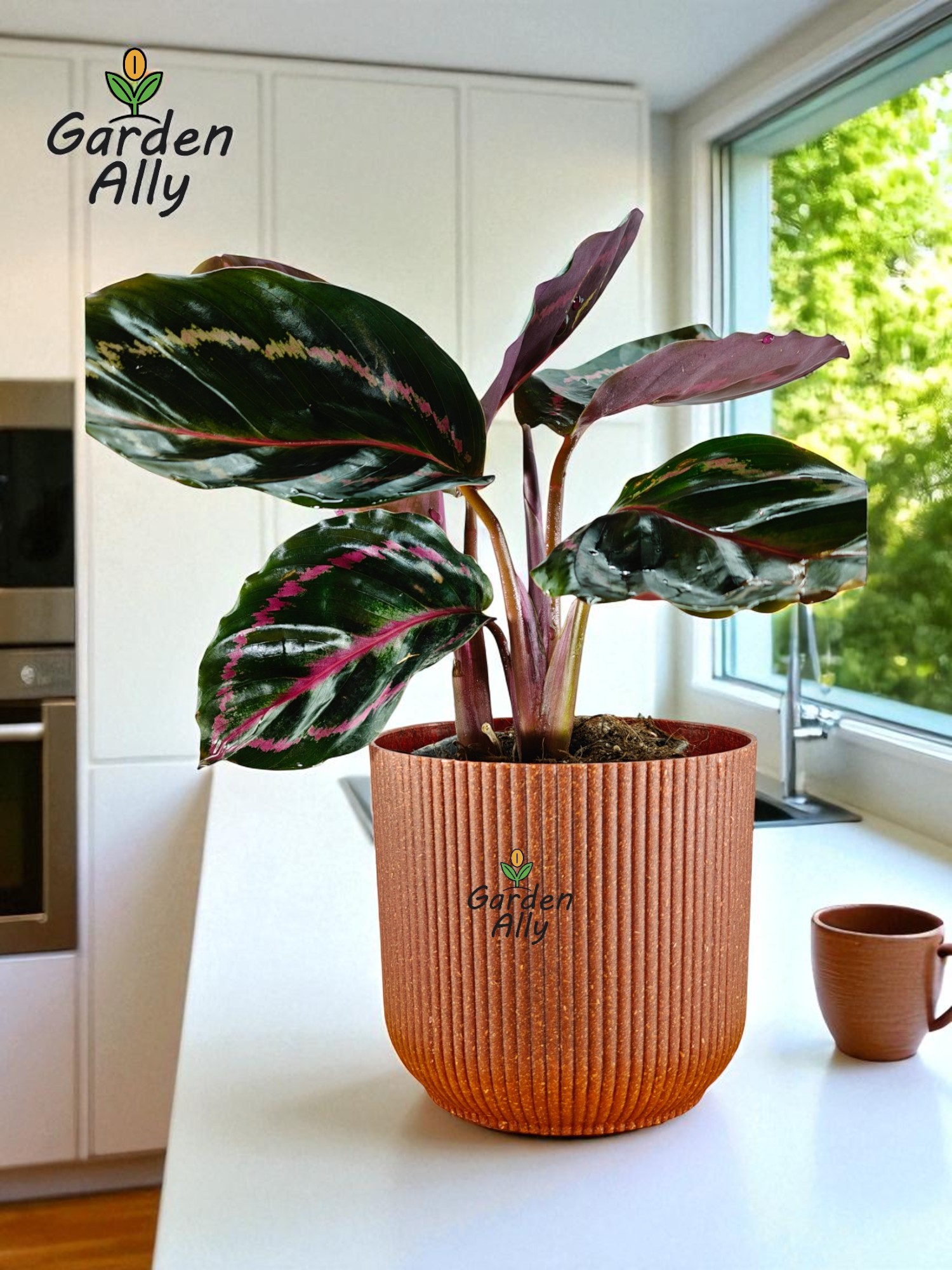
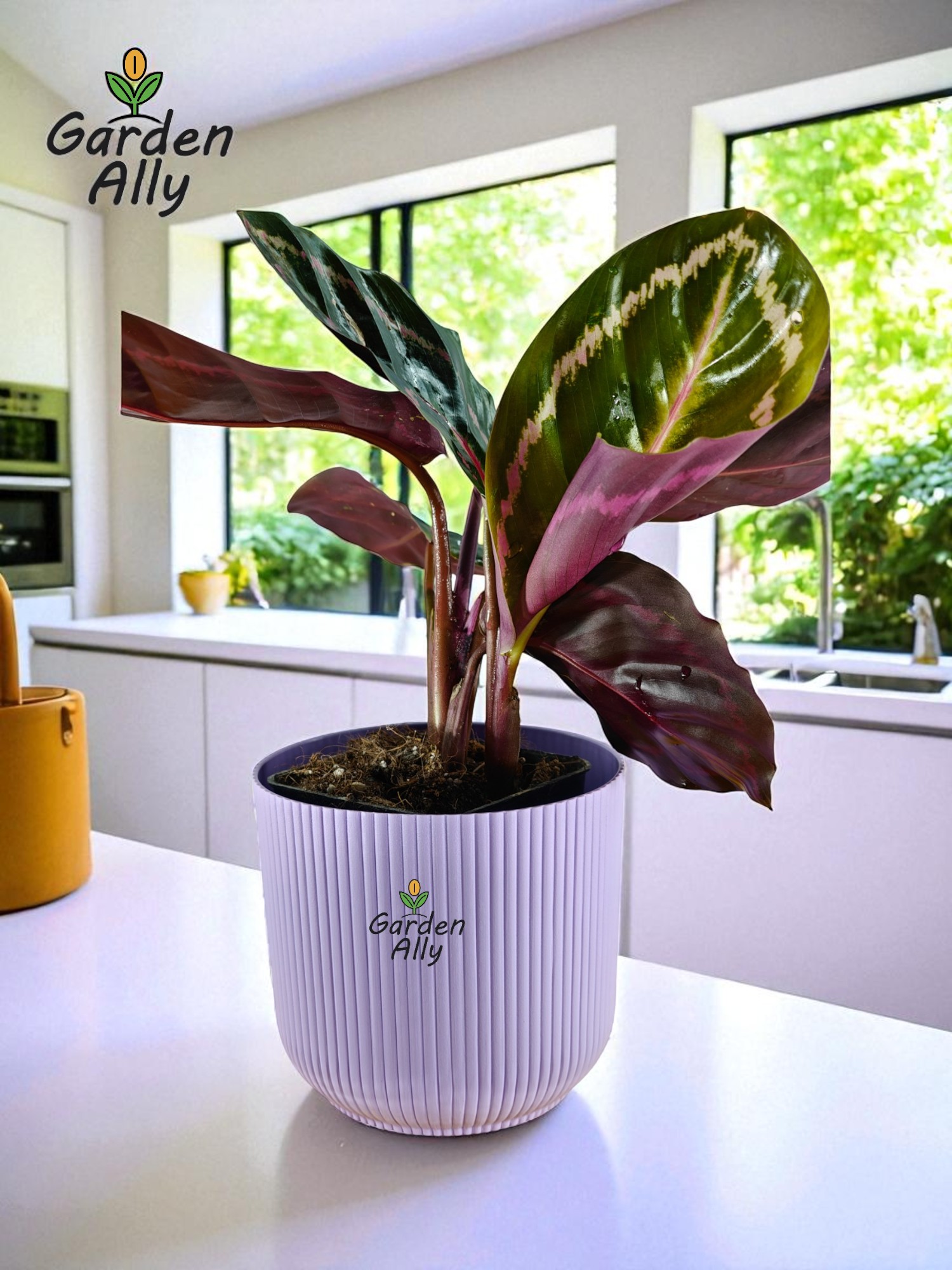
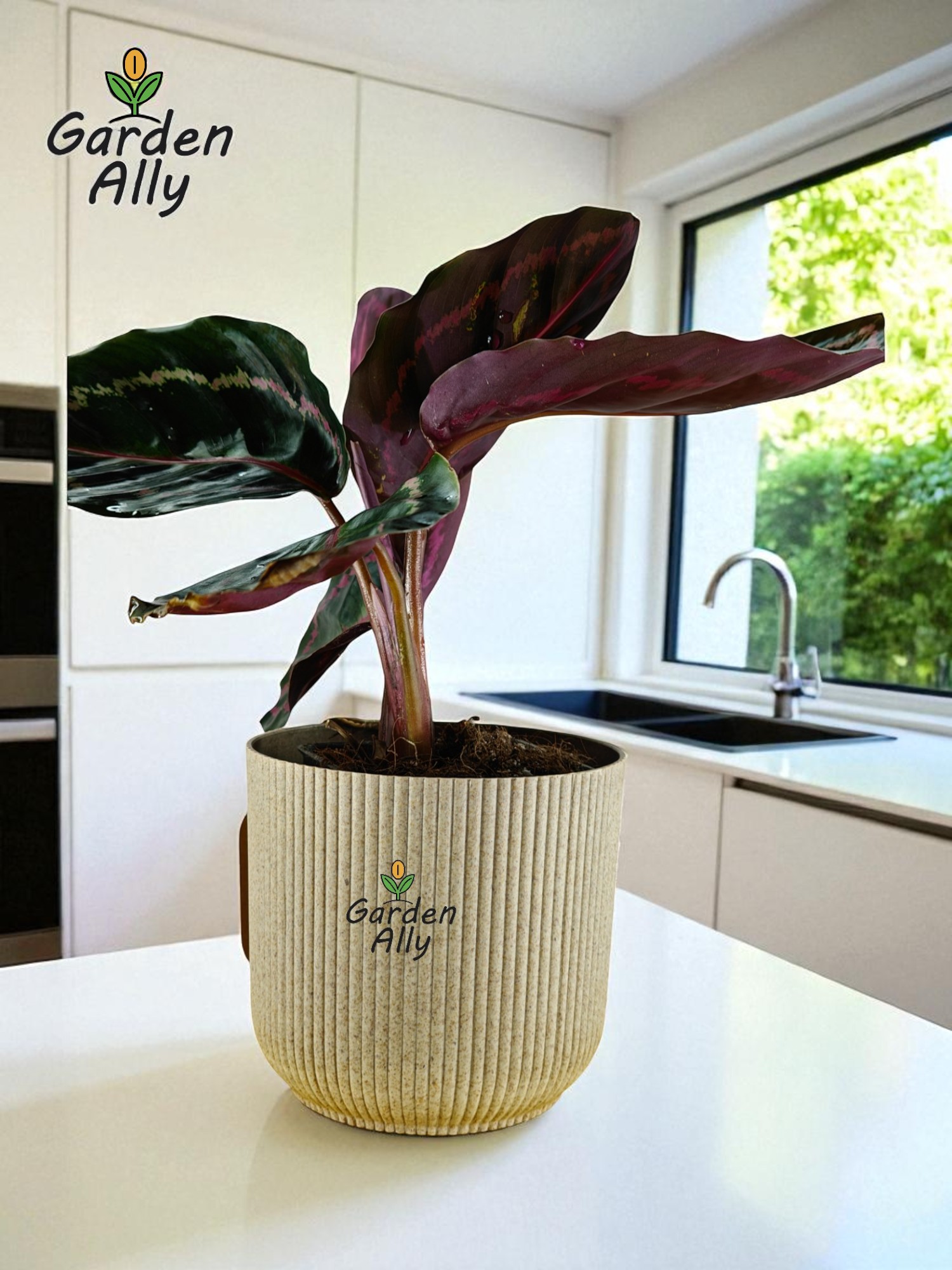
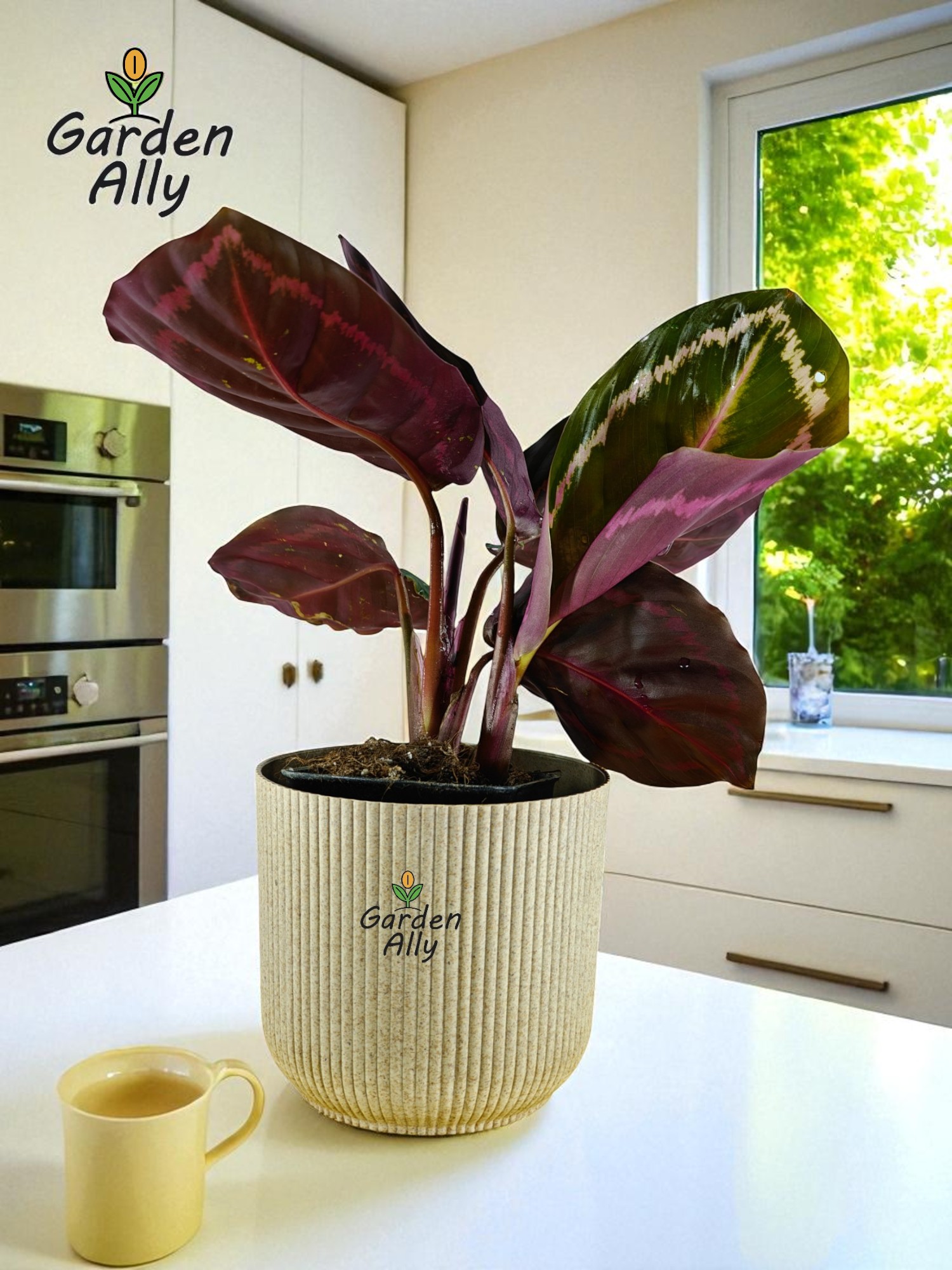
 Calatheas are known for their unique behavior called nyctinasty. Their leaves stand up at night, resembling hands in prayer, and then lower again during the day. This is a normal and fascinating characteristic.
 Prefers bright, indirect light: This is crucial for maintaining the plant’s unique, striking pattern. A spot near an east- or north-facing window, or a few feet away from a south- or west-facing window, is ideal.Avoid direct sunlight: Direct sun will scorch the delicate leaves, causing them to turn yellow, brown, or fade. It can also cause the leaves to curl as a defensive mechanism.
Tolerates lower light: While it can survive in lower light, its growth will slow and the white pinstripes may become less vibrant.
 Keep the soil consistently moist, but not soggy: Calatheas hate to dry out completely, but they are very prone to root rot if the soil is waterlogged. The best practice is to water when the top inch of the soil feels dry to the touch.Use filtered, distilled, or rainwater: This is a key tip for Calatheas. The chemicals and minerals (like fluoride and chlorine) in tap water can cause brown tips and edges on the leaves. If you must use tap water, let it sit out for at least 24 hours to allow the chlorine to dissipate.Reduce watering in winter: The plant’s growth slows in the cooler months, so it will need less water.





















Reviews
There are no reviews yet.